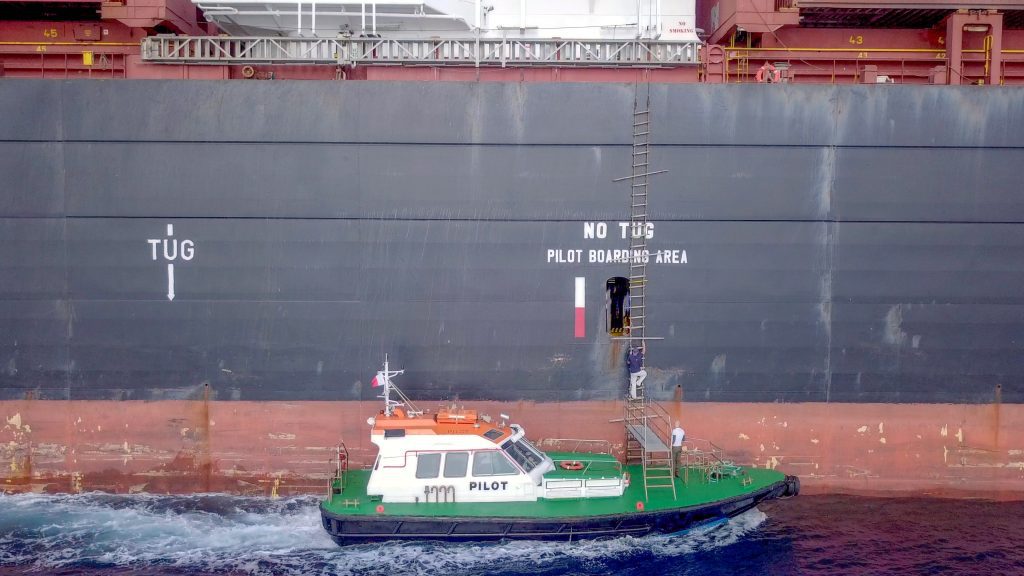
The Workboat Code Edition 3 is the Maritime and Coastguard Agency’s (MCA) safety standard for small commercial workboats and pilot boats in UK waters. It has applied to new vessels since December 2023, and existing vessels now have to move across to it. For most operators that means acting before 13 December 2026. This guide explains what the Code requires, who it applies to, what the deadline means, and how operators can manage whole body vibration (WBV), one of the areas surveyors, clients and insurers are now looking at closely.

The Code sets the standards for the design, construction and operation of small workboats and pilot boats: construction and stability, machinery and electrical systems, fire protection, lifesaving appliances, navigation and radio equipment, environmental protection, and manning and crew qualifications. It also covers remotely operated unmanned vessels. Edition 3 takes a more risk-based approach than earlier editions, and requires every vessel it covers to run a Safety Management System (SMS) in line with Annex 8.
It applies to small vessels under 24 metres load line length that are used commercially as workboats or pilot boats in UK waters, including crew transfer vessels, survey boats, dive support vessels, safety boats and harbour workboats. New vessels have had to comply since 13 December 2023. Vessels certificated under the Brown Code, MGN 280 or Workboat Code Edition 2 are covered by the transition arrangements below.
Existing vessels must comply with Edition 3 by their next renewal examination or by 13 December 2026, whichever is later. In practice, many operators will be bringing vessels across at renewals in late 2026, and the MCA and the Workboat Association have encouraged operators to start early because survey and certification slots may be in short supply before the deadline.
Whole body vibration is the vibration and repeated shock transmitted to people through the seat or deck. On fast workboats it causes fatigue, back and neck injuries and long-term health problems, and it is one of the risks an operator’s SMS and risk assessments are expected to deal with.
WBV limits come from the Merchant Shipping and Fishing Vessels (Control of Vibration at Work) Regulations 2007, with guidance in MGN 353. They set a daily exposure action value of 0.5 m/s² A(8), above which an employer must take action to reduce exposure, and an exposure limit value of 1.15 m/s² A(8), which must not be exceeded.
MGN 436 is the MCA’s guidance on reducing shock, impact and whole body vibration on small vessels, particularly high-speed craft. Amendment 5 was published in August 2025. It is guidance rather than law, but it describes recognised good practice that surveyors, clients and insurers increasingly expect to see, including the use of shock-mitigation technology and operational data.
AST Reygar’s BareFLEET vessel monitoring platform measures whole body vibration continuously, alongside impact force analysis and motion sickness monitoring through its Vessel Motion Monitoring System (VMMS). Using motion sensors and ISO-compliant measurement methods, BareFLEET lets operators:
Vessels that already have BareFLEET motion monitoring installed can add WBV monitoring with a software update, with no extra hardware. Live dashboards give crews real-time feedback, while fleet managers get reports on exposure levels, trends and high-impact events. Several of the UK’s largest port operators already request WBV monitoring across their fleets. BareFLEET is widely used on crew transfer vessels and other fast workboats.
To find out how BareFLEET can support your Workboat Code 3 compliance, contact the AST Reygar team.
Ask an expert
Whether you are looking at fuel monitoring, maintenance, vessel performance or remote asset monitoring, our team will give you a straight answer. We usually reply within one working day.

