Crew transfer vessels (CTVs) are the daily workhorses of offshore wind, carrying technicians, tools and spare parts from port to the turbines and back each shift. This guide is for CTV operators, charterers and wind farm owners. It covers what drives a CTV's running costs, how to make transfers safer and more reliable, how to look after technicians on the way out, and what Workboat Code Edition 3 means for UK fleets.
A CTV is a fast workboat, usually a 20 to 30 metre aluminium catamaran, that moves technicians between an operations and maintenance (O&M) port and offshore wind turbines on day trips. Most carry 12 technicians, because more demanding construction rules apply above 12 passengers, and larger vessels built to higher standards carry 16 to 24. Transit speeds are typically 15 to 25 knots. For wind farms further offshore, operators use service operation vessels (SOVs) that house technicians at sea.
CTVs are usually chartered on a day rate, with fuel paid separately by the charterer. That puts fuel efficiency in front of the client on every working day, and charterers increasingly want to see real fuel data from the vessels they hire.
Fuel burn rises steeply with speed, so transit speed is usually the biggest single lever. Running a couple of knots slower can save a meaningful share of fuel with little change to arrival time, especially on shorter runs. Time spent pushing on a turbine during transfers and idling while technicians work also adds up across a day.
Useful questions to answer with data:
BareFLEET measures fuel use against speed and engine load in real time, so operators can set efficient transit speeds and show charterers exactly what each day consumed. AST Reygar reports that BareFLEET customers cut fuel costs by up to 20%.
The most common transfer method is known as “bump and jump”. The CTV pushes its padded bow against the boat landing on the turbine foundation and holds station using engine thrust while technicians step across onto the access ladder.
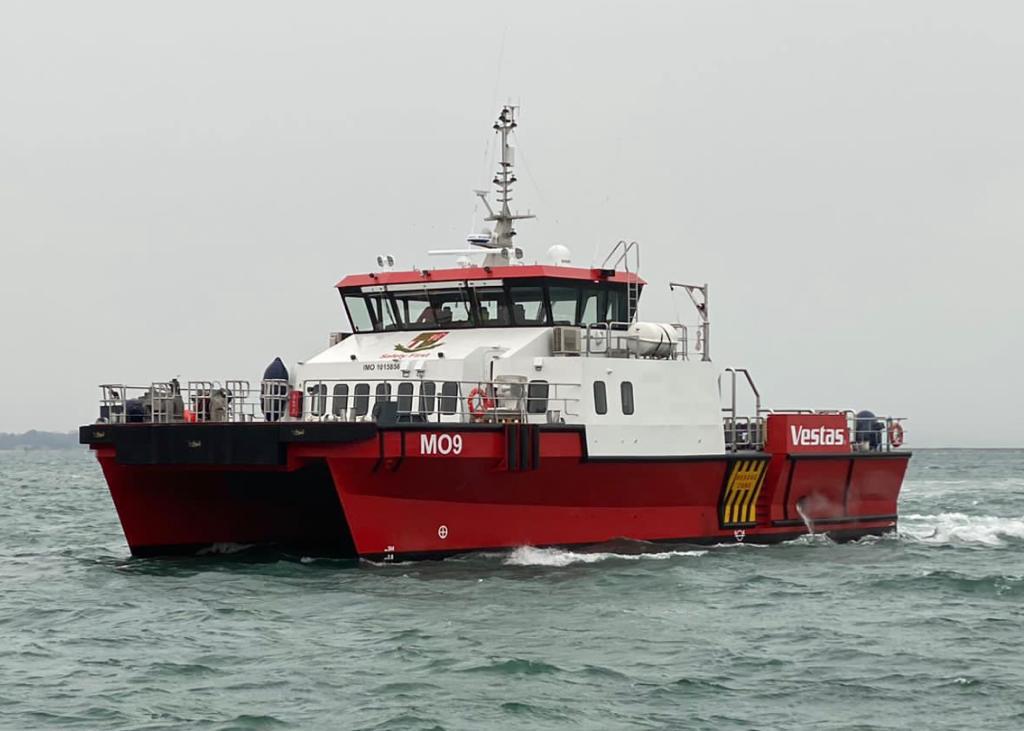
Whether a transfer goes ahead depends on the sea state. Many are limited to a significant wave height of around 1.5 metres, though wave period, direction and current all matter, and the final call is made on the day by the site marine coordinator.
Measuring how the vessel actually behaves at the turbine gives better evidence for those calls. BareFLEET records a transfer score for every crew transfer, measures bow fender impact force and integrates sea-state data. Over a season, operators can see which conditions and approaches produce steady transfers, spot vessels or skippers who need support, and show wind farm owners why a transfer did or did not go ahead.
CTVs run at speed in open water, so technicians can arrive tired or seasick, and repeated slamming exposes crew to shock and whole body vibration. A technician who arrives unwell is less safe on the turbine and may lose part of the working day.
BareFLEET calculates a Motion Sickness Index in line with ISO standards and measures whole body vibration on every trip, so operators can compare routes, speeds and vessels and show clients how crew welfare is being managed.
Read more about motion sickness monitoring.
Wind farm owners and charterers expect clear records of each day's work. Daily progress reports, transfer logs, fuel use and emissions are often compiled by hand from logbooks. When the vessel records this automatically, as with BareFLEET's digital daily progress reports (DDPRs), reports are faster and the owner and operator are working from the same figures.

BareFLEET is used on CTV fleets in Europe and the US, including all of Windcat Workboats' newbuild CTVs, and lets operators share performance data directly with wind farm owners. Read more about shared CTV monitoring.
In the UK, many CTVs are certified under the MCA's Workboat Code. Existing vessels must meet Workboat Code Edition 3 by their next renewal or 13 December 2026, whichever is later. Good records of vessel operation and maintenance make that process smoother, and engine running hours from BareFLEET can feed straight into a planned maintenance system.
Most CTVs transit at 15 to 25 knots, and some can reach around 30 knots.
Most CTVs carry 12 technicians plus crew. Larger CTVs built to higher standards can carry 16 to 24.
A CTV makes day trips from port, while an SOV stays at the wind farm for weeks and houses technicians on board. SOVs suit sites further offshore.
Many CTV transfers are limited to a significant wave height of around 1.5 metres, though the limit depends on the vessel, the turbine and the conditions on the day.
Yes. BareFLEET is used on CTVs and SOVs, so operators can compare fuel, transfer and motion data across a mixed fleet.
To see how BareFLEET could help your CTV fleet, contact the AST Reygar team.
For satellite phones, connectivity and safety communications on board, see AST Networks’ maritime communications, part of the same group as AST Reygar.
Ask an expert
Whether you are looking at fuel monitoring, maintenance, vessel performance or remote asset monitoring, our team will give you a straight answer. We usually reply within one working day.

